Professional Standards and Certification Value of a BLS Course in India
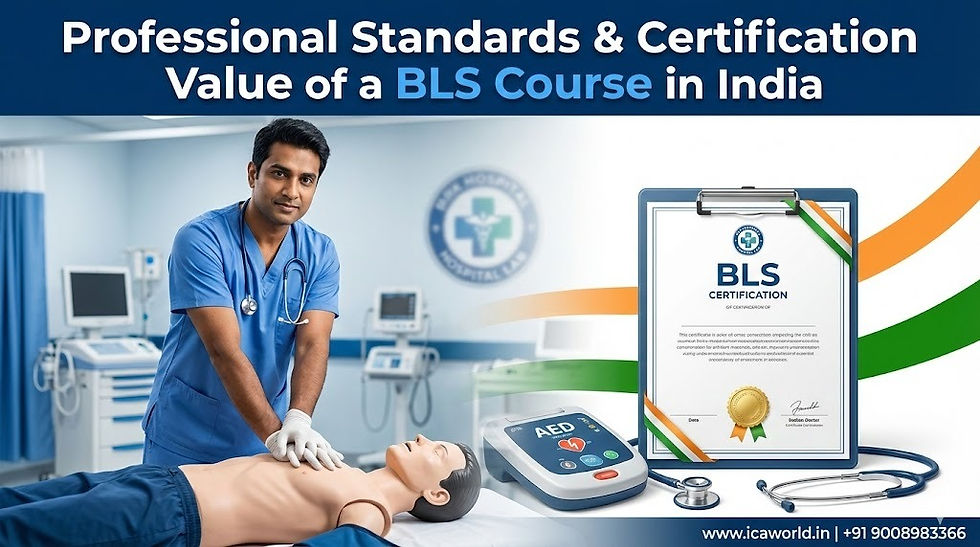
In today’s healthcare-driven world, emergency response skills are no longer optional—they are essential. Basic Life Support (BLS) training equips individuals with life-saving techniques that can make the difference between life and death during cardiac arrest, respiratory distress, choking, or trauma situations. In India, the demand for standardized life support training has grown rapidly due to rising awareness, hospital accreditation requirements, and patient safety standards.
This article explores the professional standards and certification value of a BLS course in India, its career advantages, industry recognition, and why structured training matters in modern healthcare practice.
Understanding Basic Life Support (BLS)
Basic Life Support refers to emergency procedures that sustain life until advanced medical care is available. These include CPR (Cardiopulmonary Resuscitation), AED (Automated External Defibrillator) usage, airway management, and choking relief techniques. BLS training is essential not only for doctors and nurses but also for paramedics, physiotherapists, dentists, therapists, and even non-medical professionals working in high-risk environments.
Professional BLS training programs in India follow international guidelines and structured assessment methods to ensure competency-based learning.
Why Professional Standards Matter in BLS Training
Healthcare is a regulated industry. Professional standards ensure consistency, accountability, and competence. When it comes to emergency response training, the stakes are extremely high. A poorly trained individual can cause harm instead of saving a life. That is why standardized curriculum, practical simulations, instructor qualifications, and assessment frameworks play a critical role.
Recognized BLS training programs emphasize:
Evidence-based CPR protocols
Hands-on simulation with mannequins
Scenario-based emergency drills
Updated guidelines aligned with global recommendations
Structured theoretical and practical evaluation
Such standards ensure that certified individuals are confident, skilled, and professionally competent.
The Growing Importance of Certification in India
Certification validates skills. In India’s expanding healthcare sector, employers increasingly require documented proof of life support competency. Hospitals pursuing NABH accreditation also prefer staff trained in emergency response procedures.
Beyond hospitals, professionals offering complementary healthcare services such as cupping therapy service in Bangalore or Ayurveda therapy in Bangalore also benefit from having BLS certification. It enhances credibility, ensures patient safety readiness, and builds client trust.
Core Components of a Standardized BLS Course
A professionally structured BLS course in India typically includes:
1. Adult CPR Techniques
High-quality chest compressions, rescue breathing, compression-to-ventilation ratios, and real-time performance feedback.
2. Pediatric and Infant Resuscitation
Specialized techniques tailored for children and infants.
3. AED Operation
Understanding device operation, safety precautions, and defibrillation protocols.
4. Choking Management
Heimlich maneuver for adults and back blows/chest thrusts for infants.
5. Team Dynamics in Emergency Response
Role clarity, communication strategies, and leadership in resuscitation scenarios.
Industry Recognition and Career Benefits
A certified BLS credential improves employability in:
Hospitals and nursing homes
Dental clinics
Physiotherapy centers
Sports rehabilitation facilities
Wellness and alternative therapy clinics
For example, professionals involved in cup therapy in Bangalore or advanced wellness practices often work with clients who may have underlying health conditions. BLS training adds an extra layer of safety and professionalism.
Certification Validity and Renewal
Most BLS certifications are valid for two years. Renewal ensures that professionals stay updated with evolving guidelines. Refresher training reinforces muscle memory and improves real-time performance.
Integration with Other Healthcare Courses
Many institutions offering cupping therapy course in Bangalore or acupuncture course programs encourage students to pursue BLS certification as an additional qualification. This interdisciplinary approach ensures holistic healthcare competency.
Similarly, those enrolling in a cupping therapy course gain practical skills in therapeutic interventions, while BLS certification equips them to handle emergencies effectively.
Enhancing Patient Trust and Professional Credibility
Patients today are informed and safety-conscious. Clinics offering specialized treatments such as cupping therapy in Bangalore or discussing cupping therapy cost transparency benefit from having certified professionals on staff.
Even centers promoting the Best cupping therapy in Bangalore can strengthen their reputation when practitioners are trained in life support protocols.
Legal and Ethical Implications
In emergency medical situations, legal scrutiny often examines whether adequate care was provided. Certified BLS training demonstrates that a practitioner has received standardized instruction aligned with accepted guidelines. This can be critical in medico-legal contexts.
Technology and Simulation-Based Learning
Modern BLS courses incorporate digital feedback devices, high-fidelity mannequins, and scenario-based simulations. These technologies improve learning retention and practical skill accuracy.
Global Mobility and International Opportunities
BLS certification is often a prerequisite for healthcare professionals seeking employment abroad. International hospitals and healthcare organizations require documented emergency response competence.
Quality Assurance in Training Institutes
Choosing a reputed institution ensures standardized curriculum delivery, experienced instructors, and authentic certification. ICA World is among institutions focusing on structured healthcare education aligned with professional standards.
Who Should Enroll in a BLS Course?
Doctors and nurses
Medical students
Allied health professionals
Therapists and wellness practitioners
Corporate safety officers
Fitness trainers
Return on Investment (ROI) of BLS Certification
The cost of training is minimal compared to the professional value gained. Enhanced job prospects, higher employability, and improved patient safety make it a valuable investment.
Building a Safer Healthcare Ecosystem
When more professionals are trained in Basic Life Support, survival rates improve. Early CPR and AED use significantly increase chances of recovery in cardiac emergencies.
If you are planning to advance your healthcare career or expand your clinical expertise, enrolling in a professionally structured BLS course can be a transformative step. It not only strengthens your resume but also prepares you to respond confidently during life-threatening situations. Explore certified training programs that emphasize hands-on learning, updated guidelines, and practical assessment to ensure you meet national and international professional standards.
Conclusion
The professional standards and certification value of a BLS course in India cannot be overstated. In an era where healthcare quality and patient safety define professional success, standardized life support training is indispensable. Whether you are a medical professional, therapist, or wellness practitioner, BLS certification elevates your competence, credibility, and career opportunities.
Frequently Asked Questions (FAQs)
1. What is the validity period of a BLS certification in India?Most certifications are valid for two years, after which renewal is recommended.
2. Is BLS certification mandatory for healthcare professionals?Many hospitals and accredited institutions require it, especially for clinical roles.
3. Can non-medical professionals enroll in a BLS course?Yes, fitness trainers, corporate staff, and safety officers can also enroll.
4. Does BLS training include AED usage?Yes, AED operation is a core component of the curriculum.
5. How long does a BLS course take to complete?Typically one day, including theory and practical assessment.
6. Is hands-on training provided?Yes, practical simulation with mannequins is essential.
7. Can BLS certification help in working abroad?Yes, it is often required for international healthcare roles.
8. What skills are assessed during certification?CPR technique, AED usage, choking management, and team response skills.
9. Is renewal mandatory after expiry?Renewal ensures updated knowledge and continued competency.
10. Why choose a reputed institute for BLS training?Accredited institutes follow standardized curriculum and provide recognized certification.


Comments